
Ad Astra publishes peer-reviewed scholarly research exploring science fiction, fantasy, and speculative literature. This index offers a listing of scholarly articles presented in Ad Astra’s issues since 2012.

René Walling
Issue #12
Published March, 2023
This report aims to take a look at genre books published between 1800 and 2018, inclusively.
René Walling
Issue #9
Published December, 2020
This report is a continuation of the work done in Worldcon Membership Demographics, 1939-1960 (Walling, 2016) and in Worldcon Membership Demographics, 1961-1980 (Walling, 2018) and Worldcon Membership Demographics, 1981-2000 (Walling, 2019) and aims to see if any of the trends previously observed continue in subsequent Worldcons and provide some hard data on the membership of the Worldcons of that period.
René Walling
Issue #7
Published December, 2019
This report is a continuation of the work done in Worldcon Membership Demographics, 1939-1960 (Walling, 2016) and in Worldcon Membership Demographics, 1961-1980 (Walling, 2018) and aims to see if any of the trends previously observed continue in subsequent Worldcons and provide some hard data on the membership of the Worldcons of that period.
René Walling
Issue #6
Published August, 2018
by René Walling This report is a continuation of the work done in Worldcon Membership Demographics, 1939-1960 (Walling, 2016) and aims to see if any of the trends previously observed continue in subsequent Worldcon and provide some hard data on the membership of the Worldcons of that period.
René Walling
Issue #5
Published August, 2016
by René Walling Sweeping statements and generalizations are often made about the membership of early World Science Fiction Conventions (WSFC, or Worldcon) such as “only the same people came back every year” or “the attendance was all male.” Yet rarely is more than anecdotal evidence given to support these statements. The goal of this report is to provide some hard data on the membership of early Worldcons so that such statements can be based on more than anecdotal evidence.
Victor Grech
Issue #5
Published August, 2016
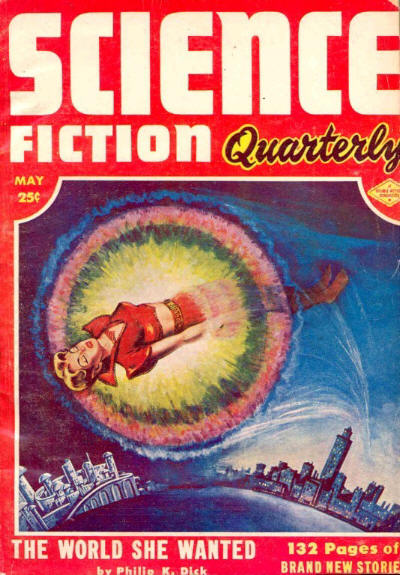
by Victor Grech Star Trek is a popular cultural phenomenon. One of the spin-offs, the Voyager series, features a naïve and lonely young human officer called Harry Kim who repeatedly falls for warm and affectionate “dark haired girls” or cold and calculating “schizoid women” as famously categorized by N. Katherine Hayles about Philip K. Dick’s oeuvre.
Sheila Finch
Issue #5
Published August, 2016
by Sheila Finch Utopian or dystopian, the view of the near future adopted by an author owes much to the political and social climate of its time. Two dystopian works by Paolo Bacigalupi, out of the many that have appeared in recent years, illustrate this point:
Jean Asselin
Issue #3
Published February, 2014
Michael R. Page
Issue #2
Published June, 2013
By Michael R. Page — Science fiction became a subject for academic study and a regular part of the college curriculum in the early 1970s. Writers Jack Williamson and James Gunn were at the center of this blossoming of SF into academia and they helped shape the future of science fiction scholarship and teaching. This article examines the legacies and impacts Williamson and Gunn have had on academe.
Victor Grech
Issue #2
Published June, 2013
By Victor Grech — Star Trek is a popular cultural phenomenon and each series reinvents cast and plot, providing a unique backdrop with which to study the evolution of philosophy as a curricular subject. This paper identifies philosophical concepts explored through the various series and movies set in the Star Trek universe, which are deontological and invoke Aristotle, Socrates, Plato, Kant and Regan.
By Victor Grech
Issue #1
Published June, 2012
by Victor Grech, et al. — Mutation in the Science Fiction (SF) genre is viewed with revulsion as it results in strange beings, threatening monsters and alien others. Infertility is a common problem, worldwide, that will eventually affect up to a third of couples. This paper will discuss the role of mutation in nature and provide an overview of mutations resulting in infertility in SF. The science behind some of the narratives will be explained while extrapolations that exceed reasonable poetic license will be pointed out.
Sheila Finch
Issue #1
Published June, 2012
by Sheila Finch — Much of the best science fiction draws on mythic themes and tropes, sometimes consciously on the part of the author, to apply this wisdom to its dreams about tomorrow. In doing so, science fiction acknowledges that while the environment we find ourselves in may change, the element that makes us human will not.
This paper concentrates on one core myth, the Hero’s fantastic journey, as it is used or referred to in science fiction from Jules Verne to the recent work of Mary Doria Russell.
Jean Asselin
Issue #1
Published June, 2012
by Jean Asselin — This article integrates previous discussions of theme into a system to classify the literature of Science Fiction (SF). Its aim is to provide a set of tools by which themes are: (1) used to communicate the relevance of SF; (2) organized under a structure that distinguishes SF themes from SF subgenres; (3) applied to categorize SF literature in databases, thus enabling further quantitative research such as trends analysis or gender issues; and (4) recognized as future speculation on ancient concerns stemming from humanity’s evolution as a species.